
Screen time has become a normal part of childhood, but as kids spend more and more hours on devices each day, parents are right to ask: what is all of this actually doing to my child?
The relationship between screen time and child development is something researchers and pediatric health experts have been studying closely for years. And the findings are worth paying attention to, especially now that the U.S. Surgeon General has issued a formal advisory on the topic.
How Much Is Too Much?
Most parents know instinctively that too much screen time is probably not great, but figuring out where the line is can feel genuinely difficult. The reality is that children and adolescents are consuming far more screen content than previous generations, and much of it happens passively without anyone really noticing.
For children under 18 months of age, most pediatric guidelines recommend avoiding screens outside of video calls. For toddlers and young children, an hour of quality programming a day is generally the upper limit. For older kids, the goal is less about a specific number and more about making sure screens are not crowding out sleep, physical activity, and real-world connection.
When screen usage starts getting in the way of those things, that is usually a sign that something needs to change.
What Research Tells Us About Screen Time and Development
The impact of screen time on child development touches nearly every area of growth. Here is what the evidence points to:
Cognitive development. Excessive screen use, especially passive viewing, has been associated with attention problems in children and reduced ability to focus for extended periods. Some research suggests that certain types of screen content may affect pathways in the brain involved in impulse control and learning.
Social development. Children build social skills through face-to-face interaction. When much time on screens replaces those opportunities, especially during the early years, it can slow social development in ways that are hard to see until later.
Academic performance. Higher amounts of screen time have consistently been linked to lower academic performance. Less time reading, thinking, and engaging with schoolwork tends to show up in grades and classroom behavior.
Emotional problems. There is growing evidence connecting screen overuse to emotional problems including anxiety, mood instability, and difficulty managing feelings. Children’s mental health can be quietly affected by what they are watching and how long they are watching it.
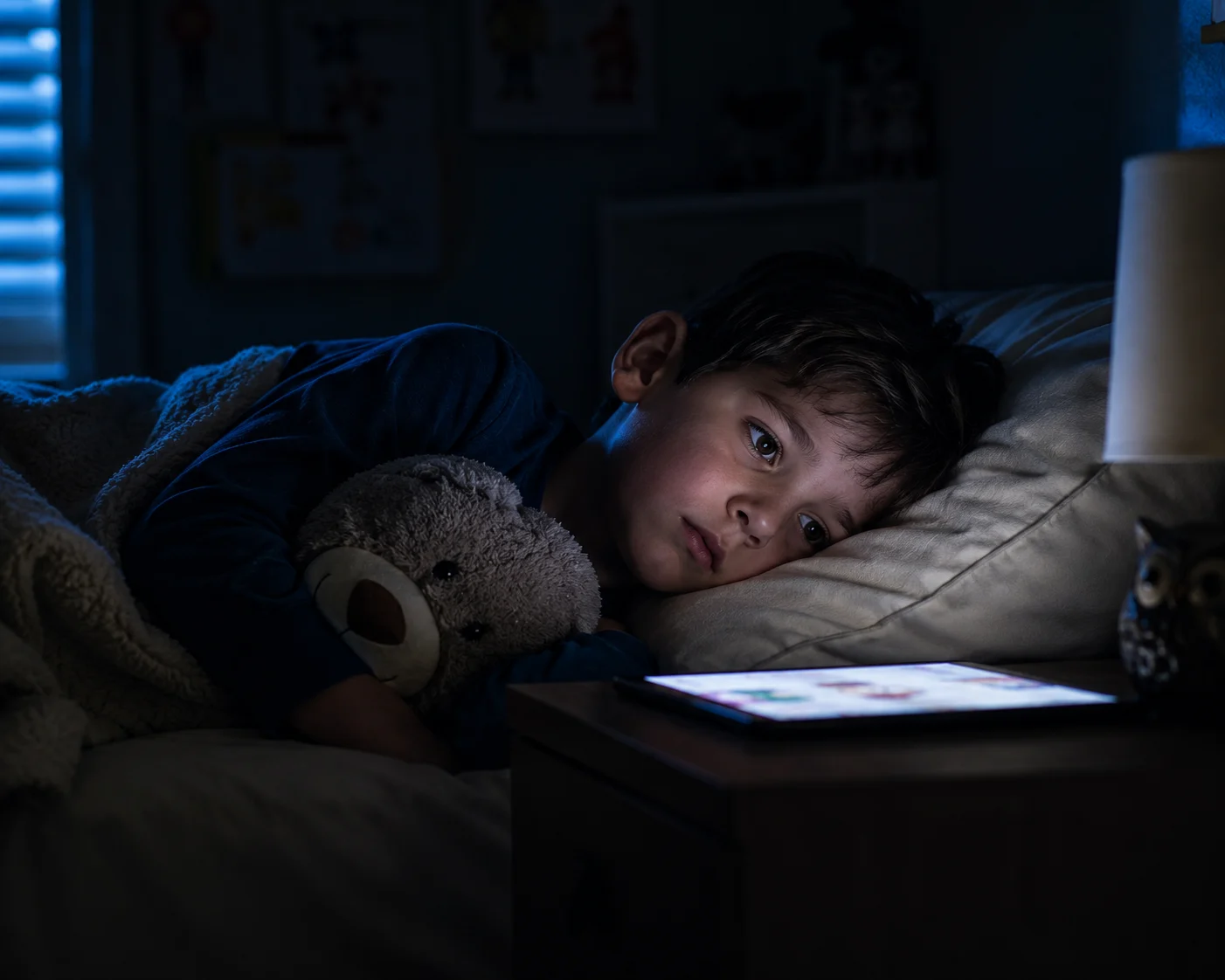
Sleep disturbances. Screen use close to bedtime is one of the most common contributors to irregular sleep in children. The stimulating nature of screens makes it harder for young minds to wind down, and the effects show up the next day in mood and behavior.
Physical health. Time on screens is largely sedentary. Over time, this can lead to weight gain and reduced physical activity, both of which have long-term consequences for children’s health.
Warning Signs Worth Paying Attention To
Signs your child may be struggling with their screen habits include becoming irritable when devices are taken away, withdrawing from friends or activities they used to enjoy, dropping grades or focus at school, irregular sleep, and being unable to stop even when they say they want to.
None of these on their own is cause for alarm, but a pattern of several together is worth addressing sooner rather than later.
What Parents Can Do
Parents play a crucial role in shaping healthy screen habits, and it does not have to mean constant conflict. A few thoughtful changes go a long way.
Set time limits that are consistent and age-appropriate. Limit screen time in the evenings, keep devices out of bedrooms, and try not to use screen time as a reward, since that tends to make it feel more valuable and harder to cut back on.
Talk to your child about why balance matters. Children respond better to boundaries when they understand the reasoning behind them. Encourage your child to engage in physical activity, spend time with friends, and find hobbies that do not involve a screen.
Use parental controls to manage content and daily limits, but do not rely on them alone. The conversations matter just as much as the restrictions.
Most importantly, find a balance that works for your family. Healthy screen time looks different in every household, and small consistent steps tend to be far more effective than sudden rules.
We Are Here to Help
If you are noticing changes in your child’s behavior, mood, or development and are not sure what is driving them, our team at My Pediatric Doctor is here to help you navigate it. Our pediatric telehealth providers are just a click away, with subscription plans designed to make quality care easy and accessible for your family.
References:
- Yu, H., Xu, C., Lu, J., Li, Q., Li, Q., Zhou, K., Zhong, J., Liang, Y., & Yang, W. (2025). Associations between screen time and emotional and behavioral problems among children and adolescents in US, National Health Interview Survey (NHIS), 2022. Journal of Affective Disorders, 379, 159–167. https://doi.org/10.1016/j.jad.2025.03.030
- https://www.goodmorningamerica.com/news/story/off-phones-surgeon-general-advisory-calls-kids-cut-133125787