24/7 Urgent CarePrimary CareWe Now Accept InsuranceNow Accepting FSA/HSAAvailable in All 50 States, Guam and Puerto Rico24/7 Urgent CarePrimary CareWe Now Accept InsuranceNow Accepting FSA/HSAAvailable in All 50 States, Guam and Puerto Rico24/7 Urgent CarePrimary CareWe Now Accept InsuranceNow Accepting FSA/HSAAvailable in All 50 States, Guam and Puerto Rico24/7 Urgent CarePrimary CareWe Now Accept InsuranceNow Accepting FSA/HSAAvailable in All 50 States, Guam and Puerto Rico24/7 Urgent CarePrimary CareWe Now Accept InsuranceNow Accepting FSA/HSAAvailable in All 50 States, Guam and Puerto Rico24/7 Urgent CarePrimary CareWe Now Accept InsuranceNow Accepting FSA/HSAAvailable in All 50 States, Guam and Puerto Rico24/7 Urgent CarePrimary CareWe Now Accept InsuranceNow Accepting FSA/HSAAvailable in All 50 States, Guam and Puerto Rico24/7 Urgent CarePrimary CareWe Now Accept InsuranceNow Accepting FSA/HSAAvailable in All 50 States, Guam and Puerto Rico

First-Time Telehealth Visit
How to Get the Most Out of a Virtual Pediatric Visit (From a Doctor's Perspective)
Learn how to prepare for your child's virtual visit with tips from a pediatrician on making telehealth work for your family.
May 21, 2026
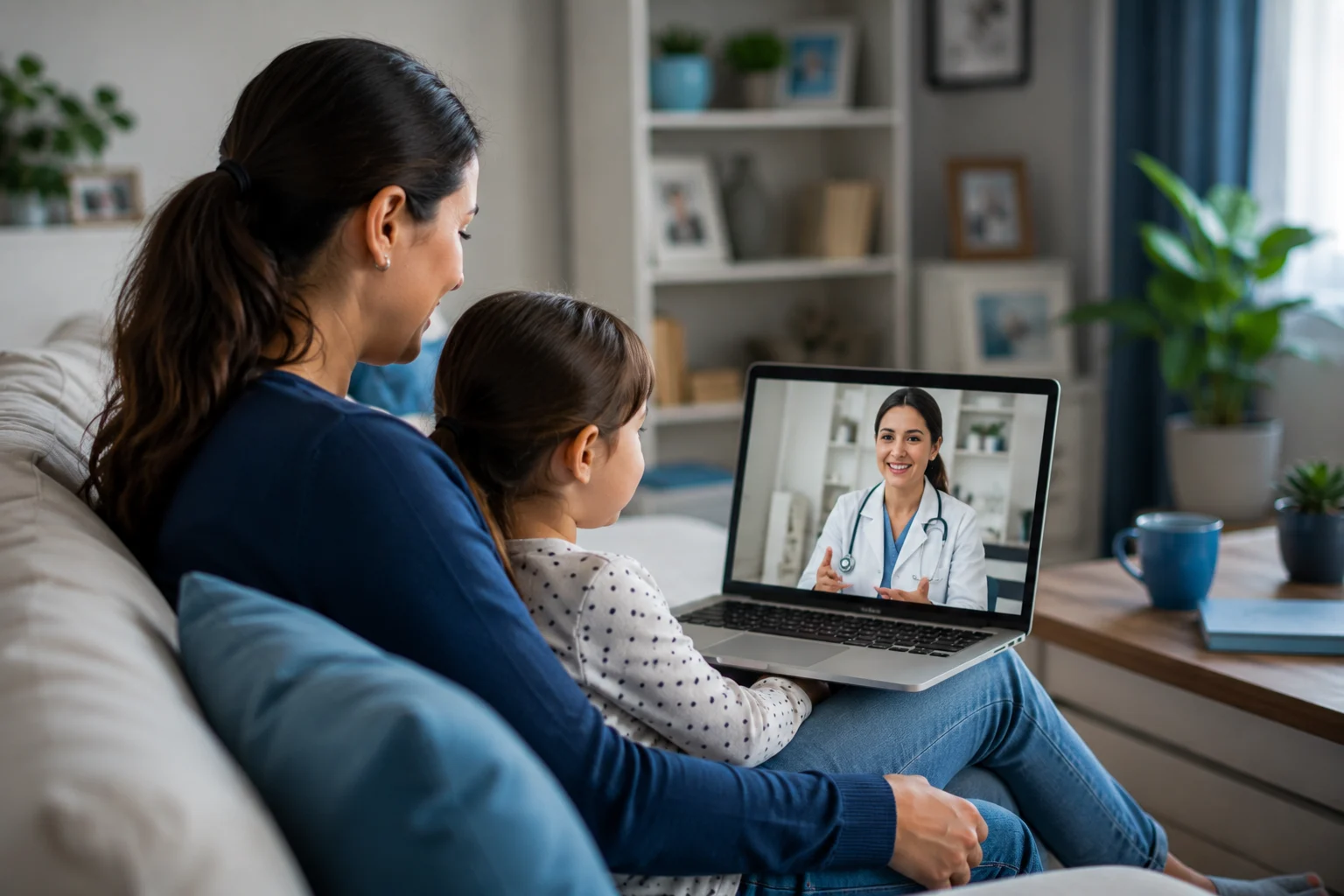
It's 9 PM on a Tuesday, and your child just spiked a fever. The doctor's office is closed, and you're not sure this warrants a trip to urgent care. You pull out your phone and wonder if there's a faster way to get answers without leaving home. There is, and it starts with knowing how to make that call count.
As doctors, we see hundreds of virtual visits every month. Some go incredibly smoothly and others hit bumps that could have been avoided with just a little setup. Telehealth has been a real shift for families since COVID-19 made it mainstream, and from our side of the screen, we want it to work just as well as it does from yours. Here's what we wish every parent knew going in.
From Our Side of the Screen, Here's What Makes a Visit Work
One of the things we notice right away is how much smoother a visit goes when the family is set up in a quiet space with good lighting. It sounds simple, but when we can see your child clearly, we can do our job better. Visits allow patients to connect with a doctor via either phone or video call, and families still get the same level of care they would during an in-person visit. But the quality of what we can assess depends a lot on what we can actually see and hear. What might surprise you is that most kids do really well on screen. They're already comfortable with devices, and being in their own space often makes them more relaxed than they would be sitting on an exam table. Younger kids may have trouble focusing during longer calls, but from our experience, a favorite toy or a quick snack break usually does the trick. A little preparation ahead of time goes a long way.The Setup Mistakes We See Most Often
From a doctor's perspective, the visits that run into trouble usually aren't medical problems. They're technical ones. Here are the things we'd love every family to have ready before the call starts:- Test your internet connection and make sure your smartphone, tablet, or computer has a working camera and microphone. We can't help with what we can't see.
- Pick a room that is well lit and quiet. Backlighting from a window makes your child's face hard to read, and background noise makes it tough to hear subtle breathing sounds.
- If your child is scheduled for a specific concern, take their temperature before the visit and write down symptoms, including when they started. This saves time and helps us focus.
- Have your child's medical history nearby, along with current medications. We often need to reference these and it slows things down when families have to go searching.
- Write down any questions you want to ask ahead of time. Parents often forget things in the moment, and we'd rather cover everything in one visit than have you wondering afterward.
What We Can Actually Assess Remotely (More Than You'd Think)
A lot of parents are surprised by how much we can handle through a screen. We can evaluate symptoms, recommend treatment options, send prescriptions to your pharmacy, and advise on whether further testing is needed. Common reasons families reach out include fevers, cold and flu symptoms, stomach issues, skin concerns, allergies, and behavioral check-ins. From our experience, when a parent holds the camera close to a rash or moves it slowly across a swollen area, we can often get a read that's nearly as good as in person. That said, we'll always tell you honestly when something needs hands-on attention. If your child needs a physical exam, lab work, or imaging, we'll recommend a follow-up in person. We'd rather be upfront about that than try to guess through a screen. This isn't meant to replace the emergency room for serious situations, but for everyday concerns, it genuinely works well.What We're Doing on Our End During the Visit
During the call, we'll ask about your child's symptoms, review their history, and may ask you to show specific areas on camera. We might guide you through some simple checks, like having your child to lie still while you look at a rash up close or gently press on their belly to check for tenderness. For younger kids, having them sit at eye level with the screen helps us observe their breathing, color, and energy level. One thing we wish more parents knew: what you tell us about behavior matters as much as what we can see. A child who has been unusually sleepy, refusing to eat, or crying differently than normal gives us important clues. Don't worry about over-sharing. From our perspective, more detail is always better than less.When We'd Recommend Going Virtual vs. Coming In
As doctors, we generally recommend a virtual visit when the concern involves a new rash, a mild fever, a recurring issue, or a question that mostly needs talking through. It's also a great option for families in rural areas, those with limited transportation, or parents managing multiple kids at home. For well-child follow-ups and mental health check-ins, it often works just as well as being in the office. We'd steer you toward an in-person visit when we need to listen to lungs or a heartbeat, check ears closely, or physically examine an area that's hard to show on camera. Your child's provider will always let you know if in-person care is the better next step. The honest truth is that most everyday concerns can be handled virtually, and families who use it regularly tend to catch things earlier because the barrier to reaching out is so much lower.From Our Team to Your Family
We know that calling a doctor, even virtually, can feel like a big step when you're not sure if the concern is "big enough." From our perspective, it always is. We'd rather hear from you early and reassure you than have you worry through the night alone. If your child needs to be seen, our team is here. You can reach out or contact us anytime, and we'll help you figure out the right next step. That's what we're here for. This blog is for informational purposes only and is not a substitute for professional medical advice, diagnosis, or treatment. Always consult your child's doctor or a qualified healthcare provider with any questions you may have regarding a medical condition.
Ready to speak with a board-certified pediatric physician?
Get expert care for your child from the comfort of your home — no insurance required.