
Sore Throat in Kids: When is it a Concern?
Sore throat in kids: Learn when a sore throat is more than just a cold. Understand the cause of sore throats, strep throat, and when to see a pediatrician.

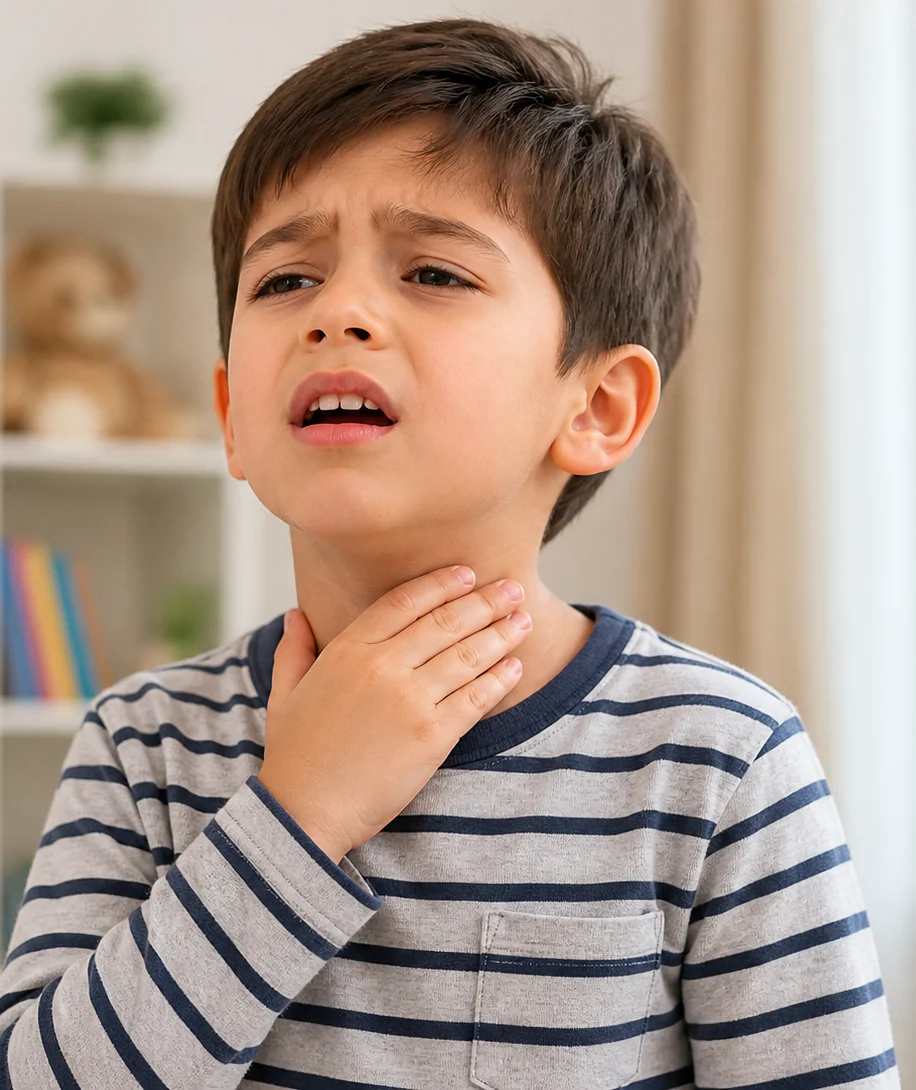
A sore throat is one of the most common reasons parents stop and wonder what may be going on. Sometimes it comes with a common cold and starts to improve within a few days. Other times, it feels more intense, comes with a fever, or makes swallowing uncomfortable, which can leave parents unsure whether it is something to keep watching at home or something that needs more attention.
A sore throat in children can happen for many reasons. In many cases, it is part of a viral illness, especially when a child also has a cough, runny nose, or congestion. Other times, a bacterial infection such as strep throat may be the cause.
You May Notice
- throat pain
- scratchiness
- fever
- low appetite
- tiredness
- swollen tonsils
- cough
- runny nose
When Symptoms Seem Mild
Many parents begin with simple care at home while keeping an eye on how their child is doing overall. Most viral sore throats improve with time, rest, and fluids.
That may include:
- rest
- fluids
- soft foods
- comfort care
- fever relief
- close watching
Many sore throats happen along with a common cold or another viral infection. If a child has a runny nose and cough along with throat pain, that often points more toward a virus. These sore throats usually begin to improve over the next few days, even if they still feel uncomfortable at first.
Some Sore Throats Need a Closer Look
Strep throat is one example parents often think about. It can cause sore throat, fever, and swollen tonsils. In some children, parents may also notice pain with swallowing or white patches on the tonsils, especially without cough or runny nose.
Strep throat is more common in school-age children, especially between ages 5 and 15. So if a child has a sore throat and fever together, and the throat stays very painful, parents often start to wonder whether it should be checked more closely.
The good news is that parents do not need to figure out the exact cause on their own. What matters most is how the child looks, drinks, swallows, and acts overall.
It May Be Worth Reaching Out If
- fever continues
- swallowing hurts
- drinking drops off
- pain gets worse
- tonsils look very swollen
- tiredness increases
- signs of dehydration appear
- something feels off
For many families, one big question is when it is time to call or have their child seen. That often depends on the full picture. A sore throat caused by a virus may improve on its own, but a sore throat without much cough, especially with fever, may need a closer look.
When Parents Want More Than Reassurance
Often, the hardest part is not the sore throat itself. It is the uncertainty around it. Parents want to know whether this sounds like a typical viral illness, whether it could be something like strep, or whether their child needs pediatric care sooner rather than later.
If a pediatrician thinks strep throat may be the cause, they may do a rapid strep test with a throat swab. In some cases, a throat culture may also be used. If testing points to a bacterial cause, treatment may be recommended based on the child’s symptoms and exam.
Support at Home Matters, but So Does Guidance
Most sore throats are not serious, and many children improve with time and supportive care. Still, parents should not feel like they have to sort through it alone, especially if their child is having trouble drinking, swallowing becomes more painful, or the fever keeps coming back.
When a child is not feeling well, having trusted pediatric guidance available can make it easier to know what may be okay to keep watching at home and what may need more attention. Parents may be looking for help easing symptoms, understanding whether the illness seems to be following a normal course, or simply feeling more confident that they are doing the right thing.
This is for educational purposes only and not a diagnosis or treatment plan.
More Articles
Related Reading
Jul 29, 2026
When Your Child's Voice Sounds Different: A Parent's Guide to Hoarseness
Is your child's voice sounding raspy or hoarse for more than a few days? Learn the common causes of hoarseness in children and when to see a doctor.

Jul 29, 2026
Tonsillitis in Children: What Parents May Notice and When to Get Help
Worried your child might have tonsillitis? Learn the signs and symptoms, how it is treated, and when a child might need their tonsils removed.
Ready to speak with a board-certified pediatric physician?
Get expert care for your child from the comfort of your home — no insurance required.