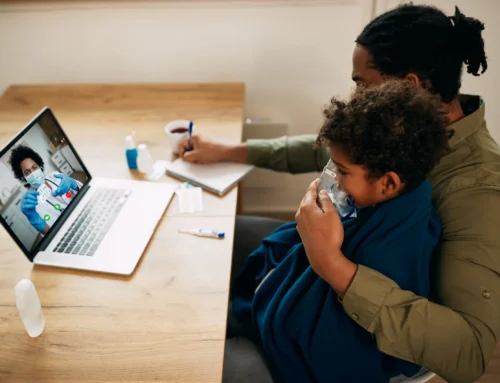
It is 9pm and your child has a fever that will not budge. You are weighing your options — sit in an urgent care waiting room for two hours, wait until morning and hope things do not get worse, or try to find someone who can actually help right now. For a growing number of families, there is a fourth option that most parents did not have even a few years ago.
This is a parent resource to help you understand what pediatric telehealth is, what it handles well, and how to know when a virtual visit makes sense versus when your child needs in-person care.

What Pediatric Telehealth Actually Is
Telehealth is medical care delivered remotely through video or phone rather than in a physical office. In pediatrics, this means a board certified physician can see your child, assess their symptoms, and in many cases diagnose and treat common conditions without anyone leaving home. Telehealth use in the U.S. expanded significantly in recent years, and what started as a convenience has become a genuine access point for families who need timely care.
What makes telehealth services different from searching symptoms online is the human expertise on the other end. A physician conducting a telehealth visit applies the same clinical thinking they would use in an office, gathering history, observing the child, and making informed decisions about what comes next. The applications of pediatric telehealth now extend well beyond minor illnesses, covering follow-up care, chronic condition management, and guidance for parents navigating uncertain situations at home.
What Telehealth Handles Well
Many of the most common reasons parents bring a child to the doctor can be handled just as easily through an online visit. Ear pain, sore throats, rashes, pink eye, coughs, fever management, urinary tract infections, and skin conditions are all things a board certified physician can evaluate and treat through telehealth services. For many families, what would otherwise mean a half-day away from work becomes a 20-minute conversation from home.
Telehealth also plays a useful role in primary care decisions. Parents who want a professional opinion before deciding whether to go to urgent care or emergency rooms can use virtual care to get that guidance quickly. The benefits of telehealth are especially meaningful for families with limited access to pediatric specialists or those facing long wait times for in-person appointments.
When In-Person Care Is the Right Call
Telehealth is genuinely useful, but it is not a replacement for every situation. Difficulty breathing, severe abdominal pain, signs of dehydration, suspected fractures, deep wounds, or a child who is unresponsive are all reasons to go directly to a pediatric emergency department rather than a screen. Any situation where a parent’s instinct is telling them something is seriously wrong should be taken to in-person emergency care without hesitation.
Knowing when to use telehealth for a sick child is one of the most practical things a parent can learn. Telehealth works well for conditions that are uncomfortable but stable, where a physical examination is not essential to reach a diagnosis. It works less well for anything requiring hands-on assessment, imaging, or emergency intervention. A good board certified physician will always tell you clearly when the situation needs more than a virtual visit can provide.
How a Visit Actually Works
A telehealth visit typically starts the same way an office visit does, with questions about what has been going on, how long symptoms have been present, and what has already been tried. From there, the physician may ask you to help observe specific things, like looking inside your child’s mouth or describing how a rash feels. Parents are a key part of the assessment in a virtual setting, and most find the process more straightforward than they expected.
For many conditions the physician can send a prescription directly to your pharmacy from the telehealth consultation with no follow-up visit needed. Virtual urgent care for kids has become a practical first stop for families who want expert guidance quickly before committing to a longer in-person visit.
What to Have Ready Before You Connect
A few minutes of preparation makes the visit go more smoothly and helps the physician get a complete picture faster.
- Have your child’s current temperature and a list of symptoms ready before you start
- Be in a well-lit space where the physician can see your child clearly
- Keep a flashlight nearby in case a throat or ear check is needed
- Know your pharmacy name so a prescription can be sent immediately if needed
- Write down any questions you want answered before the call ends
Support at Home Matters, but So Does Guidance
Knowing when to handle something at home, when to get a professional opinion, and when to head to emergency care are three of the most useful things a parent can have figured out ahead of time. Our board certified physicians are available online any time to help you make that call, assess your child’s symptoms, and provide real clinical guidance without anyone having to sit in a waiting room.
This blog is for informational purposes only and is not a substitute for professional medical advice, diagnosis, or treatment. Always consult your child’s doctor or a qualified healthcare provider with any questions you may have regarding a medical condition.