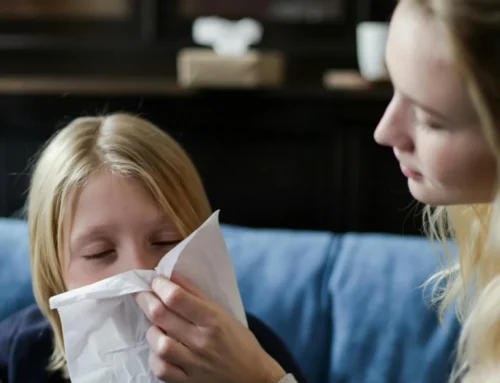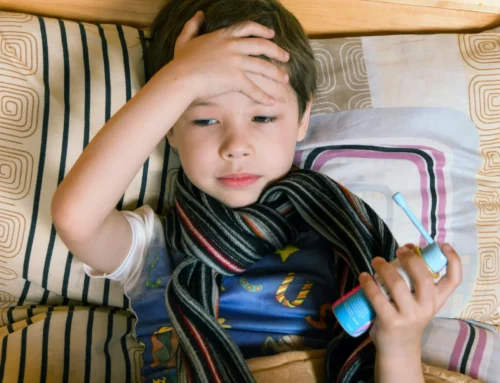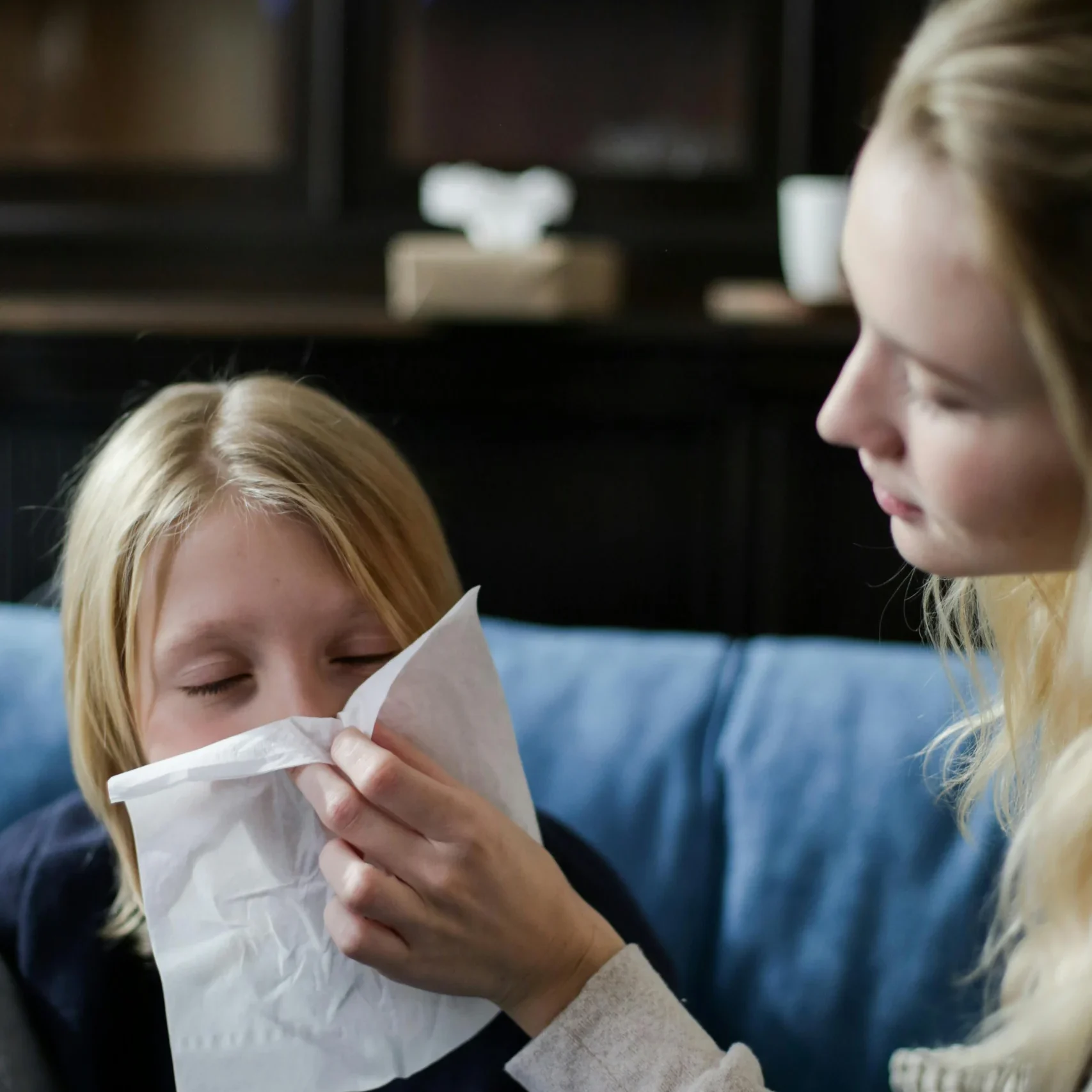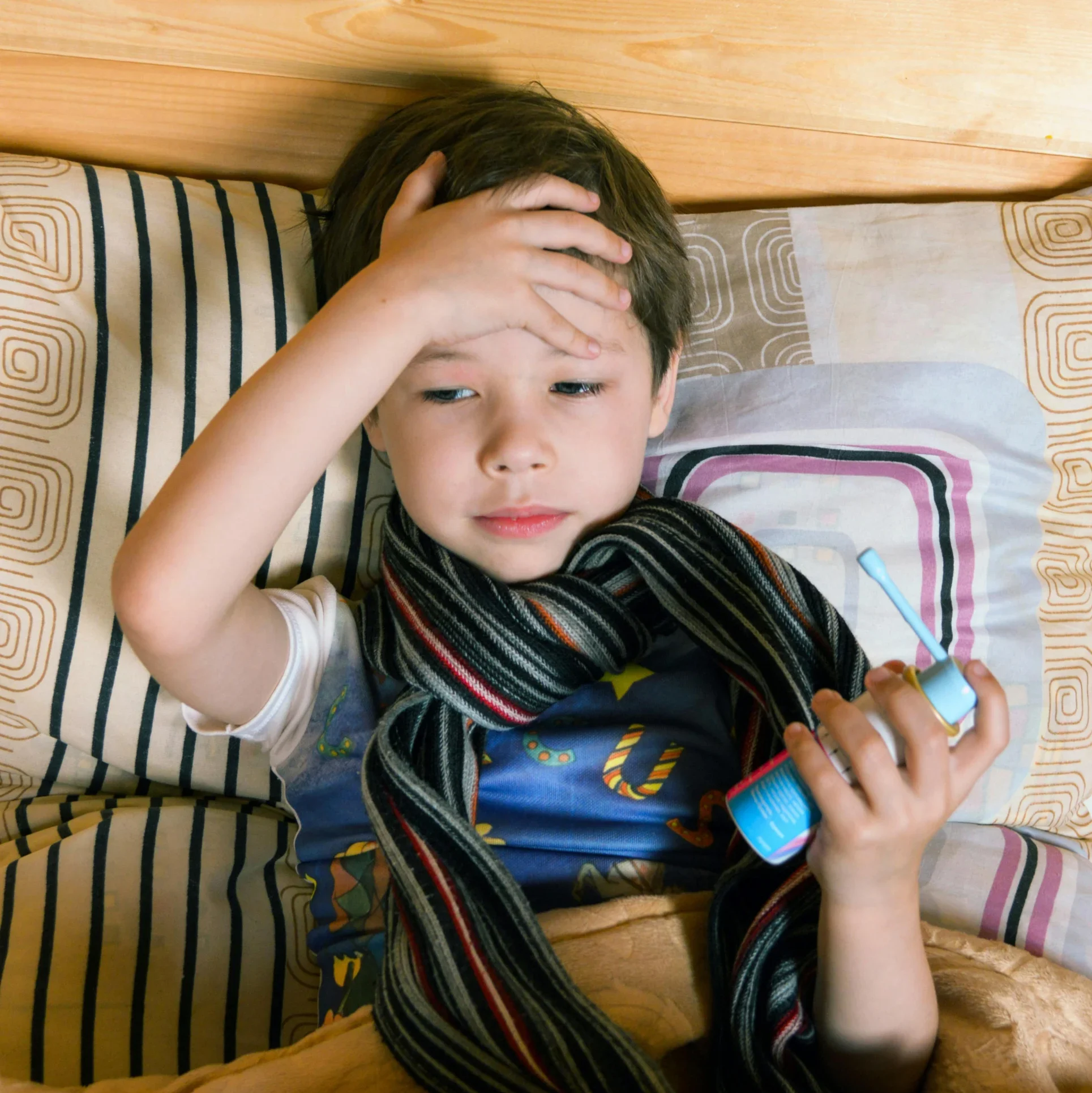
A stuffy nose is common when a child has a cold, so at first many parents simply wait and watch. Most of the time, that makes sense. But when the congestion keeps going, or seems to improve and then get worse again, it can leave parents wondering whether this is still part of a normal illness or whether a sinus infection may be starting.
This is often how sinusitis in children begins to come up. Pediatric sinusitis can look a lot like lingering cold symptoms at first. A child may still sound stuffy, have more nasal drainage, or keep coughing at night even after the first part of the illness should have started to settle. In simple terms, sinusitis is irritation and swelling in the sinus spaces. When that swelling lingers, a sinus infection may become more likely.

You May Notice
- stuffy nose
- thick drainage
- cough
- poor sleep
- low energy
- sinus pressure
- fussiness
- low appetite
These symptoms of sinusitis can start off looking mild. A child may still play and go through the day normally, even while dealing with a lot of nasal congestion. That is one reason sinusitis in children can be easy to confuse with a cold that is just taking longer to clear.
When Symptoms Seem Mild
When symptoms seem mild, many parents start with simple support at home while keeping an eye on the bigger picture.
That may include:
- rest
- fluids
- saline
- humidified air
- comfort care
- close watching
At this stage, the symptoms may still fit with a viral upper respiratory infection. Not every stuffy nose means a sinus infection. A viral infection can cause several days of congestion, cough, and nasal drainage before things begin to improve. In many children, what looks like sinusitis early on is still part of a cold.
Sometimes It Is More Than a Cold
A cold usually gets a little better over time. A sinus infection starts to seem more likely when symptoms last longer than expected or begin getting worse again. A common concern for parents is child congestion lasting more than 10 days. That is often the point when the illness starts to feel different.
A child may seem a little better, then become more congested again. Sleep may get worse. Nasal drainage may thicken. The cough may hang on, especially at night. That is often when parents start asking about congestion in kids when to worry.
This pattern can happen because the nose and sinus spaces stay swollen after a cold. When that happens, mucus may not drain well. That pressure can lead to a sinus infection or make the child feel more uncomfortable. In some cases, the problem is still viral sinusitis. In others, a secondary infection can develop and lead to bacterial sinusitis.
Why It Can Happen
Sinusitis often starts after a cold, but that is not the only cause. Allergy can also keep the nasal passages irritated and swollen, which may make symptoms last longer. Some children seem stuffy after every cold, while others have more trouble during certain times of year.
There are different types of sinusitis. Acute sinusitis is the shorter and more common kind. Chronic sinusitis is less common and is usually considered when symptoms last for a long time. Some children may also have recurrent sinusitis, meaning repeated episodes of acute sinusitis over time.
Parents do not need to sort out every type on their own. What matters most is how long symptoms last, how uncomfortable the child seems, and whether the infection appears to be improving.
It May Be Worth Reaching Out If
- symptoms last more than 10 days
- congestion gets worse again
- fever returns
- sleep stays poor
- drainage thickens
- sinus pain increases
- your child seems very tired
- something feels off
For many families, the question is not just whether a child still has a cold. It is whether a sinus infection may be developing and whether it is time to check in with a provider.
When Parents Want More Than Reassurance
Often, the hardest part is not the stuffy nose itself. It is the uncertainty around it. Parents want to know whether this still sounds like a lingering cold, whether sinusitis may be the reason symptoms last, or whether the infection should be looked at more closely.
A provider can diagnose sinusitis based on how long symptoms have been going on, whether they are improving, and what the child looks like during the visit. In most cases, providers diagnose sinusitis from the pattern of symptoms and the exam. If bacterial sinusitis seems likely, an antibiotic may be recommended. In other cases, treatment for sinusitis stays focused on comfort and time while the infection settles down.
That is why sinusitis is treated differently depending on the situation. A mild sinus infection may only need supportive care. A longer or more uncomfortable infection may need closer follow-up.
Support at Home Matters, but So Does Guidance
Most lingering congestion still improves without major treatment, but not every child follows the same path. Some children slowly get better with rest and comfort care. Others stay stuffy long enough that parents begin to wonder whether the illness is moving in the wrong direction.
When that happens, it helps to have a trusted place to turn. Clear pediatric guidance can make it easier to know what may be reasonable to keep watching at home and what may need a closer look.
This is for educational purposes only and not a diagnosis or treatment plan.