You turn your back for thirty seconds and your toddler has something in their mouth that definitely should not be there. Before you can react, they swallow it. That moment of panic is something almost every parent of a young child knows, and figuring out what to do next in those first few minutes is what this is for.
The good news is that most objects children accidentally swallow pass through the digestive system without causing harm. The not-so-good news is that some objects are genuinely dangerous and need immediate attention. Knowing which is which makes all the difference.

Why Young Children Are So Prone to This
Children explore the world with their mouths. It is completely developmentally normal, but it means small objects that end up within reach are very likely to end up swallowed. Foreign body ingestion is most common in toddlers and children aged one to three, when curiosity is high and awareness of what is safe to put in the mouth is essentially zero. The incidence of foreign body ingestion in children peaks in this age group, and objects such as coins are by far the most frequently swallowed items.
What makes this more complicated than it sounds is that children often swallow something without a parent seeing it happen. A child may not show obvious symptoms right away, or symptoms may be easy to miss or attribute to something else. This means the management of ingested foreign bodies sometimes starts with a parent piecing together clues. A child who suddenly starts drooling more than usual, refuses to eat or drink anything, or seems uncomfortable without a clear reason may be showing signs that something was swallowed.
You May Notice
When a child has swallowed something that is not passing easily, the signs tend to show up in a fairly predictable way. Objects that get stuck in the esophagus, the tube connecting the mouth to the stomach, cause the most noticeable symptoms because that is the narrowest part of the digestive tract and the most likely place for something to lodge.
Watch for drooling that seems excessive, gagging or retching without vomiting, trouble swallowing, refusing food, chest pain, or a child who keeps putting their hand to their throat. A child may also vomit repeatedly if something is stuck rather than moving through. If your child swallowed something and is showing any of these signs, that is not a wait-and-see situation.
What to Do Right Away
If you know or strongly suspect your child swallowed an object, stay calm and act quickly. Do not try to make your child vomit, as this can cause additional harm depending on what was swallowed.
Do not give your child anything to eat or drink until you have spoken with a doctor. Contact your child’s doctor or head to urgent care if you are unsure what was swallowed or whether it is dangerous. If you know a button battery or magnet was swallowed, go to a hospital emergency department immediately and do not wait.
If your child is choking, cannot breathe, or is turning blue, call 911 right away. Note the time of ingestion and try to identify what was swallowed, as this information is critical for healthcare professionals assessing the situation.
For a confirmed foreign body ingestion where the child is breathing normally and not showing distress, your doctor can help you determine whether an x-ray is needed and what the next steps should be based on what was swallowed.
When the Object Is Dangerous
Not all swallowed objects are equal. Most small toys, coins, and smooth objects pass within a day or two through the gastrointestinal tract without intervention. But two categories of ingested objects require urgent removal regardless of whether symptoms are present: button batteries and magnets.
Button batteries, also called disc batteries, are among the most dangerous items a child can swallow. A swallowed button battery can cause serious chemical burns to the tissue of the esophagus within just two hours after ingestion. There is no safe window to wait. If a child swallowed a button battery, the only appropriate response is immediate transport to a children’s hospital for removal.
Multiple magnets are equally serious. When more than one magnet is ingested, they can attract through the walls of the gastrointestinal tract and cause serious complications including perforation, requiring surgical intervention.
Water beads, small colorful gel balls popular in sensory play, are another object parents may underestimate. These expand significantly in moisture and can cause obstruction if swallowed, particularly in the esophagus or intestines.
What to Watch for in the Hours and Days After
For objects that are expected to pass without causing harm, close monitoring at home is usually all that is needed. Watch for vomiting that keeps happening, pain in the chest or abdomen, fever, or a child who seems to be getting more uncomfortable rather than less. Foreign bodies lodged in the gastrointestinal tract beyond the esophagus can sometimes cause symptoms that develop slowly, so a child who seemed fine initially and then develops symptoms over the following day or two should be re-evaluated.
It is also worth paying attention to how your child is handling the experience emotionally. Some children become anxious about eating or swallowing after an episode like this, particularly if they were frightened by the symptoms or by a medical visit. Gentle reassurance and keeping mealtimes calm and low-pressure helps most children move past the experience without lasting anxiety.
Keeping It From Happening Again
The most effective way to prevent foreign body ingestion is keeping small objects genuinely out of reach of children, not just out of sight. Toddlers are remarkably creative about accessing things that seem well placed. Button batteries deserve particular attention. They are found in remote controls, key fobs, musical greeting cards, and small toys, and they should be kept in devices with secured battery compartments that children cannot open.
Teaching older children what is and is not safe to put in their mouths is part of the equation too, but it should never replace physical safeguards for the youngest children in the household. If there are older siblings whose small toys, craft supplies, or school items are kept at lower levels, a regular sweep of the floor and low surfaces goes a long way toward reducing what a toddler can access.
Support at Home Matters, but So Does Guidance
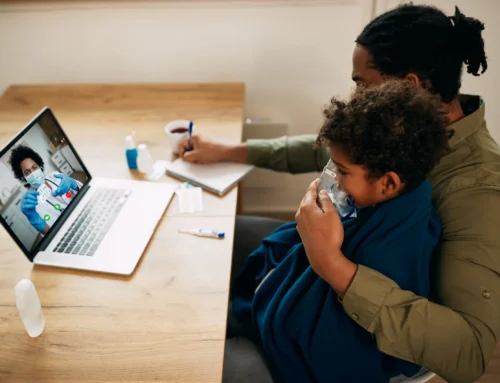
When a child swallows something, the first question is always the same: is this an emergency or is it okay? That distinction is not always obvious from the outside, and it is exactly the kind of question our doctors can help you work through. Available online around the clock, they can assess what your child swallowed, help you understand whether home monitoring is appropriate, and tell you clearly when to go to the ER.
This blog is for informational purposes only and is not a substitute for professional medical advice, diagnosis, or treatment. Always consult your child’s doctor or a qualified healthcare provider with any questions you may have regarding a medical condition.